

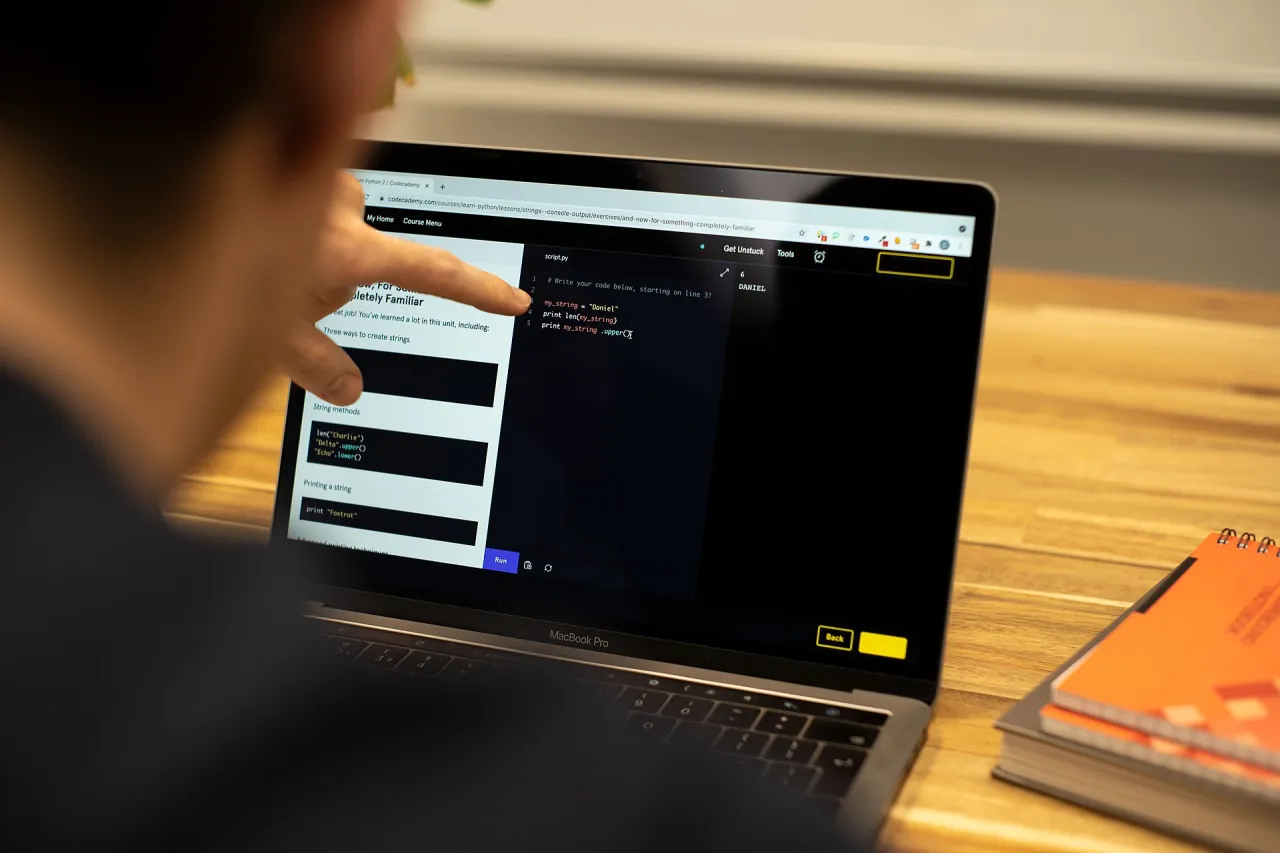
Learning after work often begins with an ambitious timetable and ends with a tired learner looking at several unfinished lessons. A useful plan starts with the week you actually have: travel, family commitments, changing shifts and the practical conditions needed to study. Short sessions become more valuable when each one has a clear job.
Featured image: Preply.com Images · CC BY 2.0 · Source
This is a planning method to adapt, rather than a universal schedule. You might be working through a business course, developing a digital skill or preparing for professional study. The first question is what you need to be able to do by the end of the week, and what evidence would show that you can do it.
Give learning after work one weekly outcome
Choose an outcome small enough to demonstrate. “Finish business management” is too broad. “Explain the difference between a cash forecast and a record of past transactions” is a task you can attempt and check. For a practical digital skill, the outcome might be creating a simple document from an approved example.
Check the course’s own requirements before setting the outcome. A useful personal plan should support the syllabus and any real deadlines. Keep uncertain dates or requirements on a separate list to verify with the provider, rather than building the week around an assumption.
UNESCO’s work on lifelong learning recognises learning across ages and settings. You do not need to recreate a full-time student’s day to take learning seriously. You do need a realistic task and opportunities to work on it.
Plan around dependable windows
Look at the coming week and identify the study windows you can reasonably protect. A dependable half hour may be more useful than a two-hour evening that is regularly interrupted. Leave room for ordinary delays instead of filling every available space with a new commitment.
Give each window a purpose before it begins. One session might introduce a concept; another might work through an example; a later session might test your understanding. When the session starts, you should not have to spend most of it deciding what to study.

Keep a smaller fallback task for a disrupted day. Reviewing one unresolved question or preparing the materials for the next session can maintain continuity. A fallback is a practical adjustment; it should not quietly become the only kind of study you do for several weeks.
Prepare the materials before the session
Put the current lesson, notes and practice task in a location you can find quickly. Name files clearly enough to distinguish the current version. Keep one short note stating where you stopped and the next action. That note reduces the effort required to restart after a long working day.
If your course permits downloading materials, prepare the permitted files while a dependable connection is available. Keep access details in an appropriate password manager rather than writing credentials into shared notes. Use an example without sensitive workplace data when practising outside your employer’s approved systems.
For a practical course, also check what equipment or software the next task needs. Discovering a missing requirement after the session starts can consume the study window. Separate a preparation problem from a learning problem so that you can solve the right one.

Leave time to produce an answer
Watching a lesson can introduce an idea, but the weekly outcome usually requires you to explain or perform something yourself. Reserve part of the session for an answer, a worked example or a small completed task. Keep the result so you can compare it with the next attempt.
The Learning Scientists describe retrieval practice as bringing learned material to mind. A practical application is to close the lesson and explain its central idea before checking your notes. This gives the next session a specific gap to address.
If your explanation is incomplete, write down the missing part and the resource that can help. Avoid replacing a difficult practice task with another hour of unrelated browsing. Progress becomes clearer when the next action follows from an observed difficulty.
Return to useful material on another day
Include a later session that revisits the important idea. The guidance on spaced practice recommends spreading learning across time rather than concentrating all of it immediately before a test. Apply that general idea to the reliable windows in your own week.
For example, a fictional learner could read a short lesson on Tuesday, complete an example on Thursday and explain the method without notes on Saturday. Those days are an illustration, not a prescribed interval. The useful feature is returning to the material and checking what can now be done independently.
Review the plan before adding more
At the end of the week, compare the outcome with your saved work. Identify what you completed, what remains unclear and which study windows were dependable. If the plan was repeatedly disrupted, reduce its scope or move the sessions before adding another course.
Choose the next learning step from your actual needs. G-Learning lists Managing a Successful Business among its learning products; check the current course details and requirements before deciding whether it fits your goal. A sustainable routine is one you can repeat, inspect and adjust while still producing useful work.